
For the Listening Traveler: A Guide for Ethical Visits to Indigenous Communities
A practical guide for travelers on how to visit Indigenous communities with respect, consent and care, centering Indigenous-led protocols rather than tourist expectations.
A visit to an Indigenous territory can be either a shared, contemplative moment within ongoing human relations, territory and memory, or just another stop on a tourist’s checklist before returning to the AC van. This guide is for the travelers who choose the authentic path—one that starts before you walk the lands and continues with responsibility long after the trip is over.
For the Listening Traveler
A Guide for Ethical Visits to Indigenous Communities
Why Intentions Matter More Than Itineraries
Before asking “How can I visit an Indigenous community in Brazil?”, it is worth asking “Why do I want to go?”
Are you seeking healing because it feels trendy and cultured? Or are you prepared to let the experience question the way you live? Are you curious about the “simple life”, yet unprepared for the reality of tropical heat, the persistent hum of insects, the vulnerability of shared spaces and the discipline of silence?
Let’s be honest: an Indigenous territory is not a themed hotel. If basic conditions feel like “roughing it”, this may not be your path yet.
But if you are willing to give up screens for real conversations, to wake up with daylight instead of alarms, to eat what is served and sleep in a hammock or a simple bed, then you are already moving toward another way of being in a place, where time moves differently. It is a return to a rhythm you didn't know you had lost, where silence is full of life.
Stepping Into a Living Struggle
There is also a political question. Many communities in Brazil live under the constant pressure of land grabbing, illegal mining, and systemic violence. Visiting these territories is a powerful act of awareness, but It means stepping into active struggles for survival, not into an untouched peaceful paradise. Learn whether there are land conflicts or threats in the region. Understand that your presence, however well-intentioned, is never neutral.
Understanding that you are walking on contested ground, held by people who have resisted for over 500 years, can deepen your awe and bring multiple layers of honor and respect. You are not visiting a museum of the past; you are meeting people who, against all odds, choose to live, to plant, to sing, and to remember. That is a strength worth honoring and witnessing.
The Power of the Invitation
Every visit starts with an invitation. If your access to a community is mediated by people who cannot clearly explain who invited them, how long they have been in relationship and what is collectively decided, you might consider this a red flag.
Prefer paths opened by Indigenous organizations, community associations or long‑standing partners. These channels are not only more ethical; they help ensure the safety and dignity of both host and guest.
When you receive an invitation, pay attention to dates and rhythms. Is your visit aligned with local festivities, ceremonies or periods of rest? Ask about appropriate dress, colors that may be sensitive and whether specific symbols are fine to wear. Avoid ostentation: hyper‑expensive accessories can create distance and reproduce hierarchies.
When you arrive without flashy brands, heavy gear or anything you are afraid to put down, you are already saying something true: I am here to listen, not to perform.
Simplicity is not about erasing who you are; it is about not letting your things speak louder than your presence. Clothes, cameras and objects should never take up more space than the people and the territory hosting you.
Questions to Ask Before you book
A visit that honors a territory begins long before you book a ticket. Here are some of the questions you should be asking:
Who decided this experience would exist? Was it created by the community, or by outsiders who later "brought locals in"?
How is the revenue distributed? Is there a clear agreement about what percentage stays with families, collectives, and leaders?
What community processes does this experience support? (e.g., Education, food security, legal defense, land recovery, infrastucture?)
How often do visits happen? Is there time for people to rest, farm, fish, attend assemblies, and live life without tourists watching?
If an operator cannot answer these questions with ease and transparency, reconsider. A "no" given before departure is better than a "yes" that turns you into one more person extracting energy, images, and stories.
Being a Guest, Not a Consumer
Once you are on the way, the shift is from "What can I get?" to "How can I be of any support?"
Photography is not neutral. Always ask before reaching for your camera, especially regarding children, elders, or sacred objects. Be prepared to keep certain stories private.
Offer your hands. If you see a mutirão (collective work), ask to join. Help wash a dish, sweep a floor, or carry a basket. When you work alongside your hosts, you stop being a customer to be served and become a temporary member of the community. That shift is sacred.
Share with modesty. You do not need to broadcast every ritual on social media. Some of the most profound experiences are the ones you carry quietly—the ones that change you from the inside out.
After the Visit: The Story You Tell
Your responsibility does not end when you leave the territory. The way you tell the story can either reinforce extractive narratives or support ongoing struggles.
When you share your experience, give credit to the people and organizations who hosted you. Do not present their ancestral wisdom as your own "discovery."
Before publishing texts, photos, or videos, ask yourself: Who gains power from this story? If the narrative is only about your "enlightenment" while the community remains anonymous, something is off.
Honor the journey by how you live afterward. What habits you change, what injustices you refuse to ignore, how do you speak up for the territories you were privileged to walk upon
What is Pindorama (for now)?
This guide is our starting point.
Pindorama.tours was born from the belief that territories, their people and knowledges are not industrial products. Any journey co-created here only happens when invited and shaped by the communities themselves, with absolute clarity on revenue, communication and limits.
For now, these notes are a place for reflections and questions that help travelers approach Brazil with more listening and less hurry. They are seeds, collected from conversations with Indigenous thinkers, community leaders and guardians of the land. They will keep changing as we learn.
A poetic reminder from São Paulo’s streets for listening while you read. This track reminds us of the importance of approaching with respect and to move through the world mindful of different subjectivities.
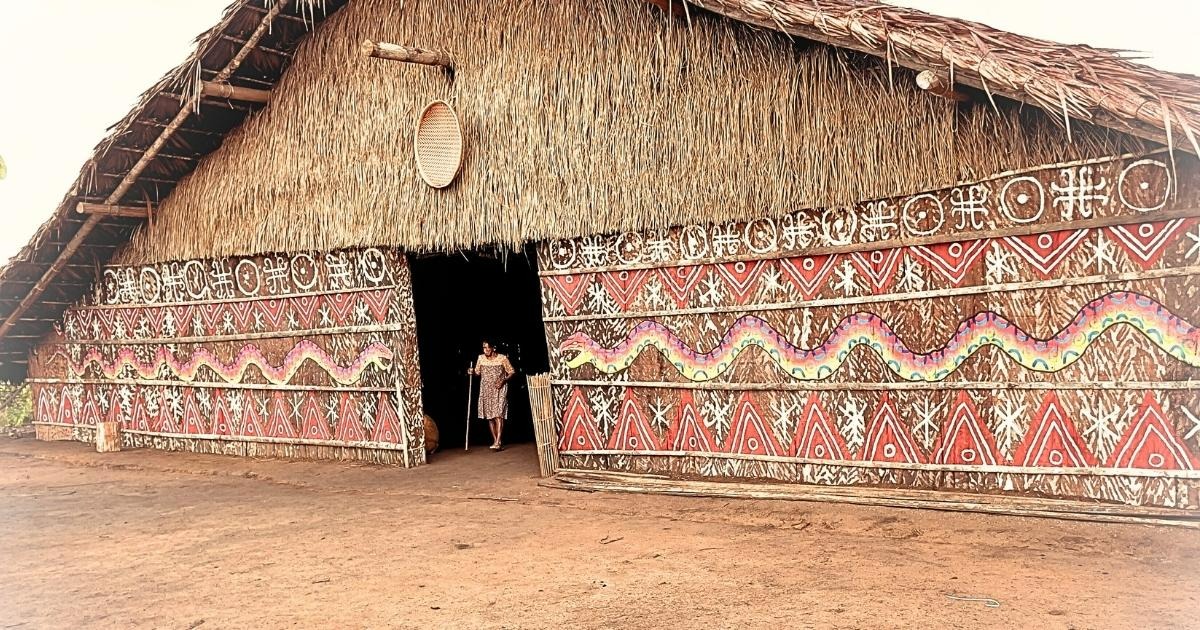
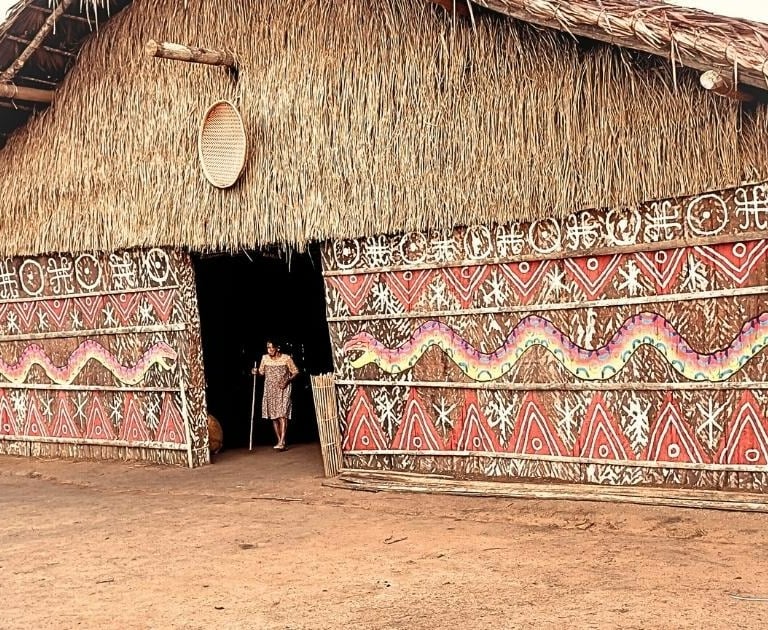
Community‑centered visit with the Yepá Mahsã people in São Gabriel da Cachoeira, at Ʉhtã Bo'ó Wi'í: an elder walks out of the maloca, framed by Daiara Tukano’s rainbow boa painting on the walls.


Come along with us!
If these notes resonate, we invite you to stay close:
Read more reflections on regenerative travel and community‑centered journeys in Notes from Pindorama.
Join our newsletter to receive reflections, resources and invitations for community‑centered journeys in Indigenous territories across Brazil.

Travel rooted in territories, guided their by keepers
© 2026 Pindorama Tours.